
When we talk about “automation” in industrial machinery, we instinctively think of touch screen monitors, dozens of sensors, and complex algorithms. The idea – commercially appealing but technically misleading – that a machine is more cutting-edge the more software it contains is now consolidated.
But for those who daily design and test automatic systems for coiling flexible pipes, the focus must return to the physics of the process. Modern automation is mechatronics, but there is an impassable rule: software is the “brain”, but if the mechanical “skeleton” has play and approximate tolerances, the dynamics are compromised. A PID control forced to constantly work to compensate for imprecise mechanics generates an unstable system subject to drift.
Electronics is not a “band-aid”
Faced with this rule, many manufacturers prefer to saturate the plant with electronics, abusing the term “Smart Automation” to mask a blatant lack of mechanical quality. This unjustified hyper-complexity generates the so-called “OT Technical Debt”: the quickest way is chosen by adding lines of code to correct physical defects, but the end customer will pay the bill through the explosion of the Total Cost of Ownership (TCO) and the collapse of the OEE. Micro-stops multiply and the customer becomes dependent on external software developers for the diagnostics of every minor anomaly.
Substance put to the test: the strapping plant
True Smart Automation means using essential and targeted electronics to govern an inherently stable process. The software must manage the logic safely, not fight against mechanical defects.
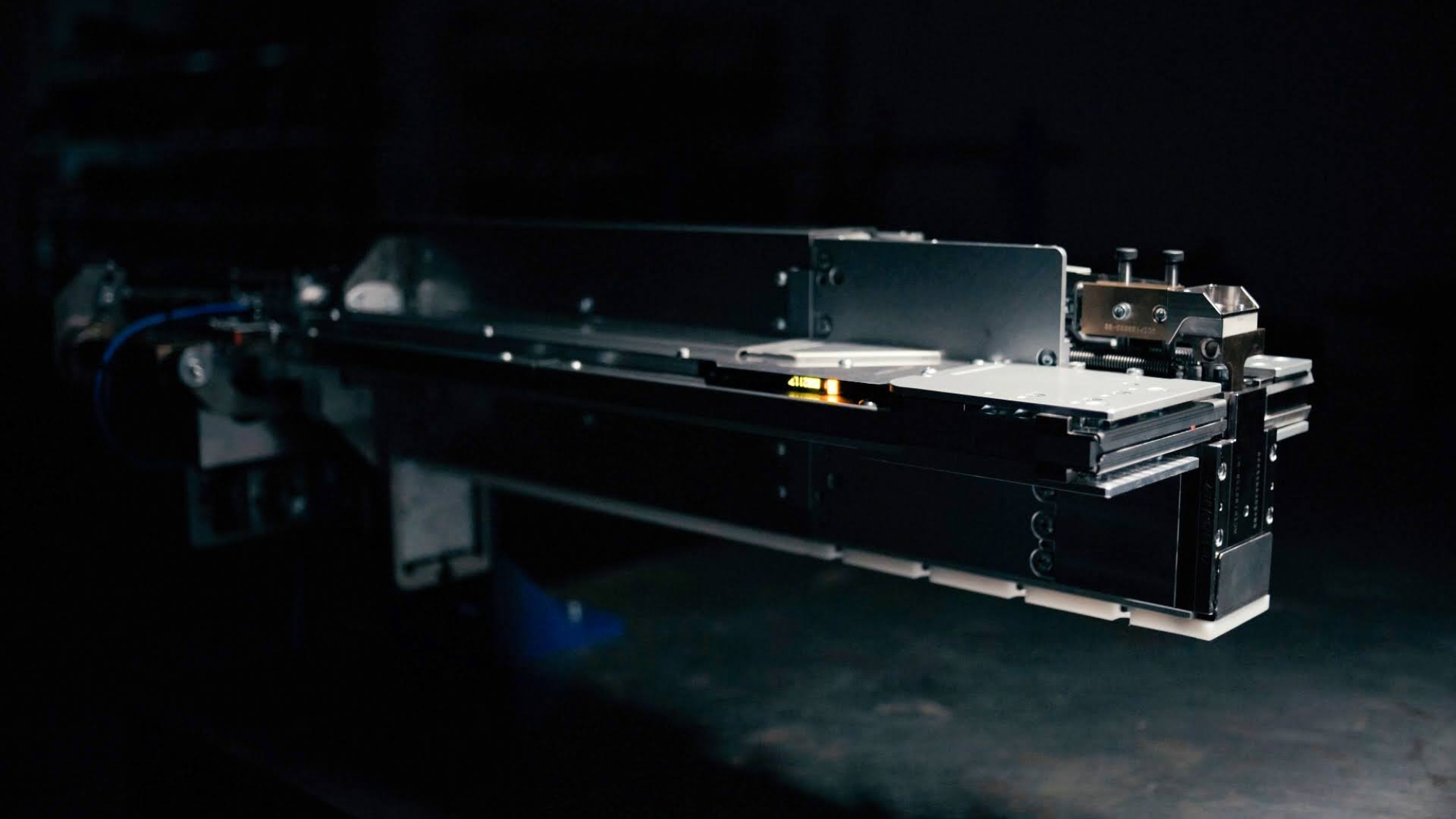
The practical demonstration of this philosophy, or rather our ability to simplify complexity, is our strapping plant. Having engineered it with very high precision mechanical tolerances and superior components, we have been able to drastically reduce the use of sensors. Superfluous sensors are the first source of “appearance” and the main cause of false alarms and hidden machine downtime. Thanks to this structural “substance”, the maintenance of the strapping system is extremely focused on a few key points, and reliability is guaranteed over time.
The advantage for those who manage production is mathematical:
- Maximize uptime: solid mechanics means less wear and constant parameters.
- Eliminate hidden machine downtime: elimination of blockages due to stressed sensors or unstable controls.
- Diagnostic independence: problem-solving returns within the reach of the normal internal maintenance technician.
This is the automation that generates profits on the production line. Everything else is just appearance.