Coiler System - High-Precision Mechanics for Automatic Coilers in Ripatransone (AP)

Pipe sampling system

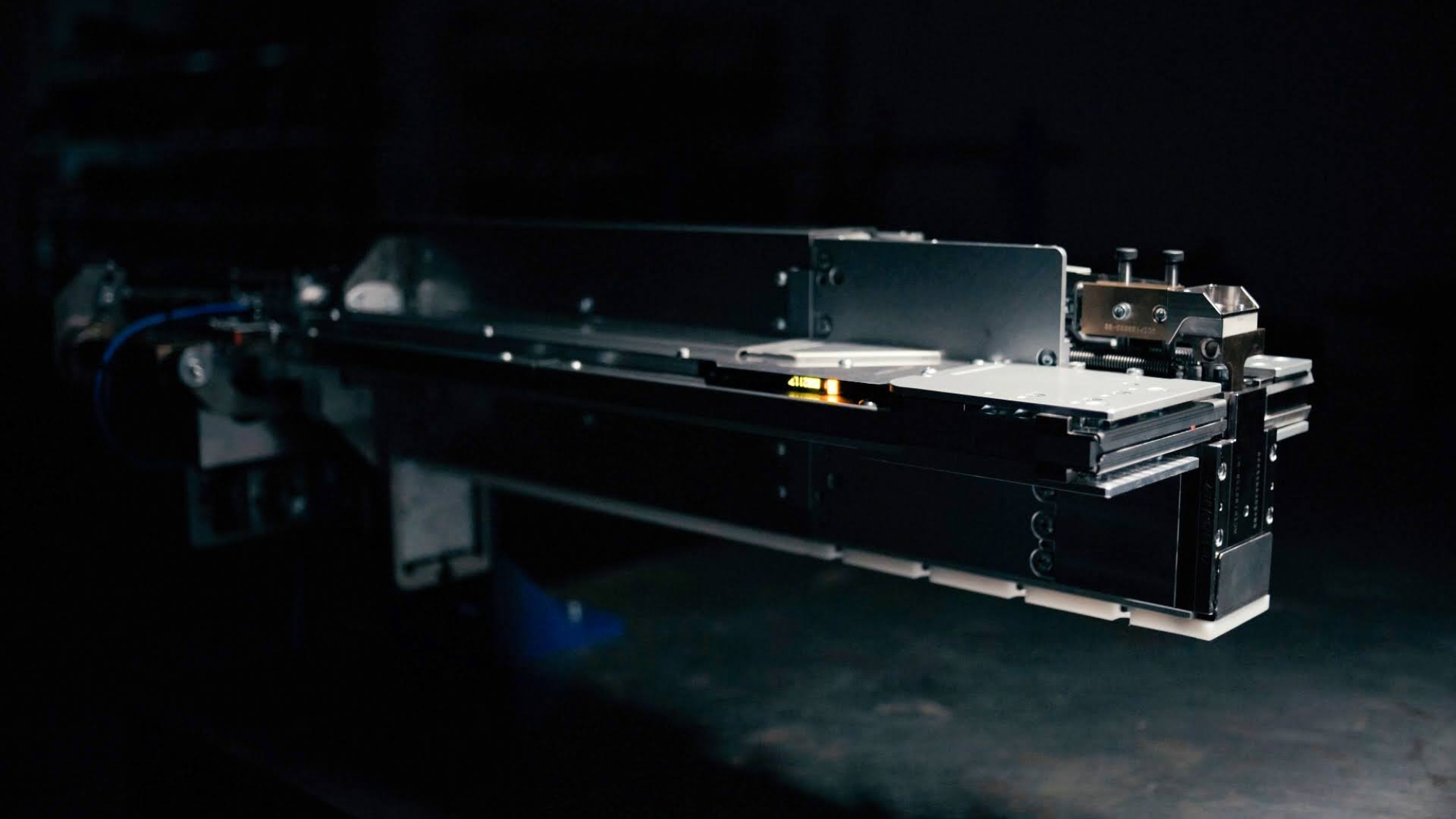
Designed for continuous quality control without interrupting the production cycle. It can be configured in two modes: automatic cutting of a cut length collected in a pull-out drawer integrated into the coiler—allowing the operator to retrieve it in complete safety while the machine is running—or cyclic programming for an extended-length coil that is easily identifiable for manual sampling.

Coiler System - Insights - High-Precision Mechanics for Automatic Coil Winders in Ripatransone (AP)

Compact end of line for an efficient layout that reduces TCO

In a flexible pipe extrusion plant, available space is never enough. Production lines require large spaces for the extruder, cooling tanks, and haul-offs. Inserting a new machine into an already saturated layout often becomes a logistical puzzle, especially at the end of the line, a critical area that risks turning into a real “bottleneck”.

Production managers know well how the footprint of machinery directly affects the TCO (Total Cost of Ownership). Many manufacturers propose coilers with two reels placed side by side horizontally. This architecture inevitably develops in width, expanding the footprint of the machine and “stealing” vital space for the transit of forklifts, for material accumulation areas (buffers), and for the safety of operators.

The advantage of reels on the carousel: the CSZO series

To solve this problem, in our CSZO series models we have exploited the rotation on a central axis. The two reels rotate in a circle on a carousel, overlapping the coiling and packaging phases in the same volumetric space. The result is an unparalleled ratio between production capacity and footprint: the maximum structural width of the machine remains contained within 2000 mm.

The Monoblock: compactness, physics, and flexibility

This exceptional reduction in dimensions allows the machine to be born and remain unified. The engineering choice to anchor the modules of the CSZO series to a monoblock supporting structure translates into pure mechanical solidity: the machine is extremely robust, eliminates vibrations during the operating cycle, and guarantees constant precision over time.

Furthermore, this architecture leads to a drastic reduction in what we define as “hidden costs”:

International Logistics and Shipping: Keeping the compactness under two meters in width allows the machine to be shipped in a standard container without disassembling critical parts, avoiding the disproportionate costs of oversized modules (Flat Rack).

Plug & Play Startup (Commissioning): The coiler leaves the workshop already wired, tested, and aligned in a single block. Once at the plant, the risks related to on-site assembly are canceled, and startup times are limited to a single day.

Plant Flexibility: Today’s markets require continuous layout reconfigurations (Lean Manufacturing). Being monoblock structures, the machines can be easily lifted with a normal forklift or overhead crane to be repositioned in the plant without losing factory geometries and calibrations.

In this way, the end of the line ceases to be a limiting factor and transforms into a clear operational advantage.

Coiler System - Insights - High-Precision Mechanics for Automatic Coil Winders in Ripatransone (AP)

Precision Mechanics: the true foundations of automation to reduce TCO

When we talk about “automation” in industrial machinery, we instinctively think of touch screen monitors, dozens of sensors, and complex algorithms. The idea – commercially appealing but technically misleading – that a machine is more cutting-edge the more software it contains is now consolidated.

But for those who daily design and test automatic systems for coiling flexible pipes, the focus must return to the physics of the process. Modern automation is mechatronics, but there is an impassable rule: software is the “brain”, but if the mechanical “skeleton” has play and approximate tolerances, the dynamics are compromised. A PID control forced to constantly work to compensate for imprecise mechanics generates an unstable system subject to drift.

Electronics is not a “band-aid”

Faced with this rule, many manufacturers prefer to saturate the plant with electronics, abusing the term “Smart Automation” to mask a blatant lack of mechanical quality. This unjustified hyper-complexity generates the so-called “OT Technical Debt”: the quickest way is chosen by adding lines of code to correct physical defects, but the end customer will pay the bill through the explosion of the Total Cost of Ownership (TCO) and the collapse of the OEE. Micro-stops multiply and the customer becomes dependent on external software developers for the diagnostics of every minor anomaly.

Substance put to the test: the strapping plant

True Smart Automation means using essential and targeted electronics to govern an inherently stable process. The software must manage the logic safely, not fight against mechanical defects.

The practical demonstration of this philosophy, or rather our ability to simplify complexity, is our strapping plant. Having engineered it with very high precision mechanical tolerances and superior components, we have been able to drastically reduce the use of sensors. Superfluous sensors are the first source of “appearance” and the main cause of false alarms and hidden machine downtime. Thanks to this structural “substance”, the maintenance of the strapping system is extremely focused on a few key points, and reliability is guaranteed over time.

The advantage for those who manage production is mathematical:

  • Maximize uptime: solid mechanics means less wear and constant parameters.
  • Eliminate hidden machine downtime: elimination of blockages due to stressed sensors or unstable controls.
  • Diagnostic independence: problem-solving returns within the reach of the normal internal maintenance technician.

This is the automation that generates profits on the production line. Everything else is just appearance.

Coiler System - Insights - High-Precision Mechanics for Automatic Coil Winders in Ripatransone (AP)

Intuition, History, and Industrialization: The Legacy of Andrea Mazzoni

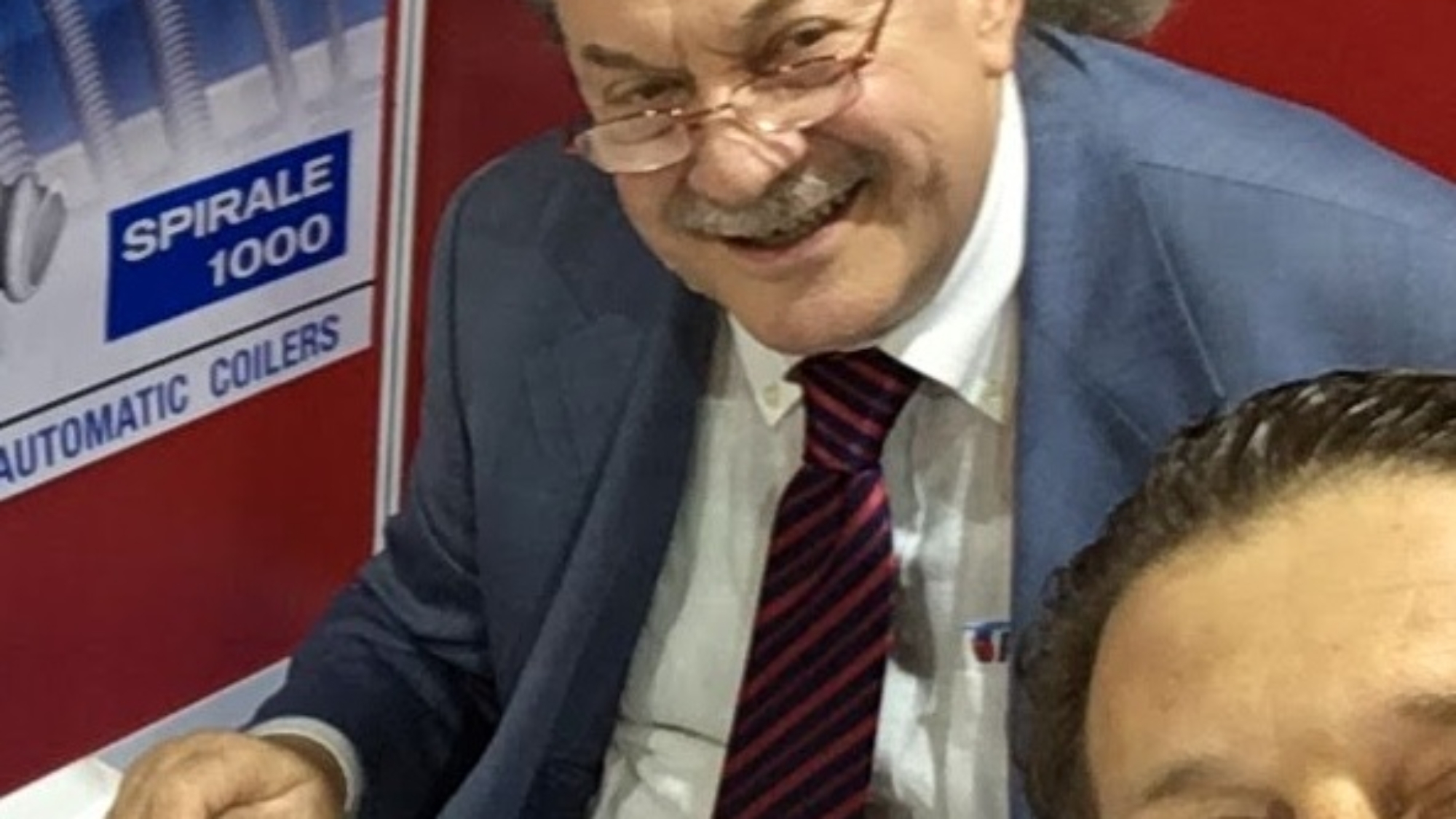
n 1979, Andrea Mazzoni developed in Italy an idea that would forever change the end of the extrusion line: the first double-reel coiler with automatic strapping. His intuition was born from a deeply practical need, namely to facilitate human work in a sector where production speeds were rapidly becoming unsustainable for manual operations alone. Endowed with innate qualities as an innovator, he managed to synthesize this need into a solution capable of enclosing extraordinary simplicity within the real complexity of the process. His mind was a true technological incubator for our sector. His ideas have set the standard and shaped the market, so much so that many of the realities that lead the sector globally today were born or developed by drawing precisely on the intuitions of Andrea Mazzoni and his unmistakable technical imprinting.

In 2015 our paths crossed. The meeting with Andrea and his Macoiler International marked the genesis of Coiler System. Our task was to gather that invaluable creative spark of his to industrialize it. We engineered his pioneering vision, transforming it into the founding principle that guides us today: “Precision Mechanics – Smart Automation”. That original intuition has become a solid, repeatable, and standardized process, based on absolute mechanical reliability. Of Andrea Mazzoni, in addition to the technical heritage linked to the Macoiler experience, we will always carry with us a profoundly human memory. He was a man of inexhaustible energy, a visionary dreamer who continued to look to the future until the last moment.

For our part, we have taken his enormous wealth of experience and developed, improved, and engineered it, transforming it into a structured business model and highly reliable industrial machines. It is in this technical and productive concreteness that the continuity of his work lives on.

Thank you, Andrea.